Irfan Kuyumculuk
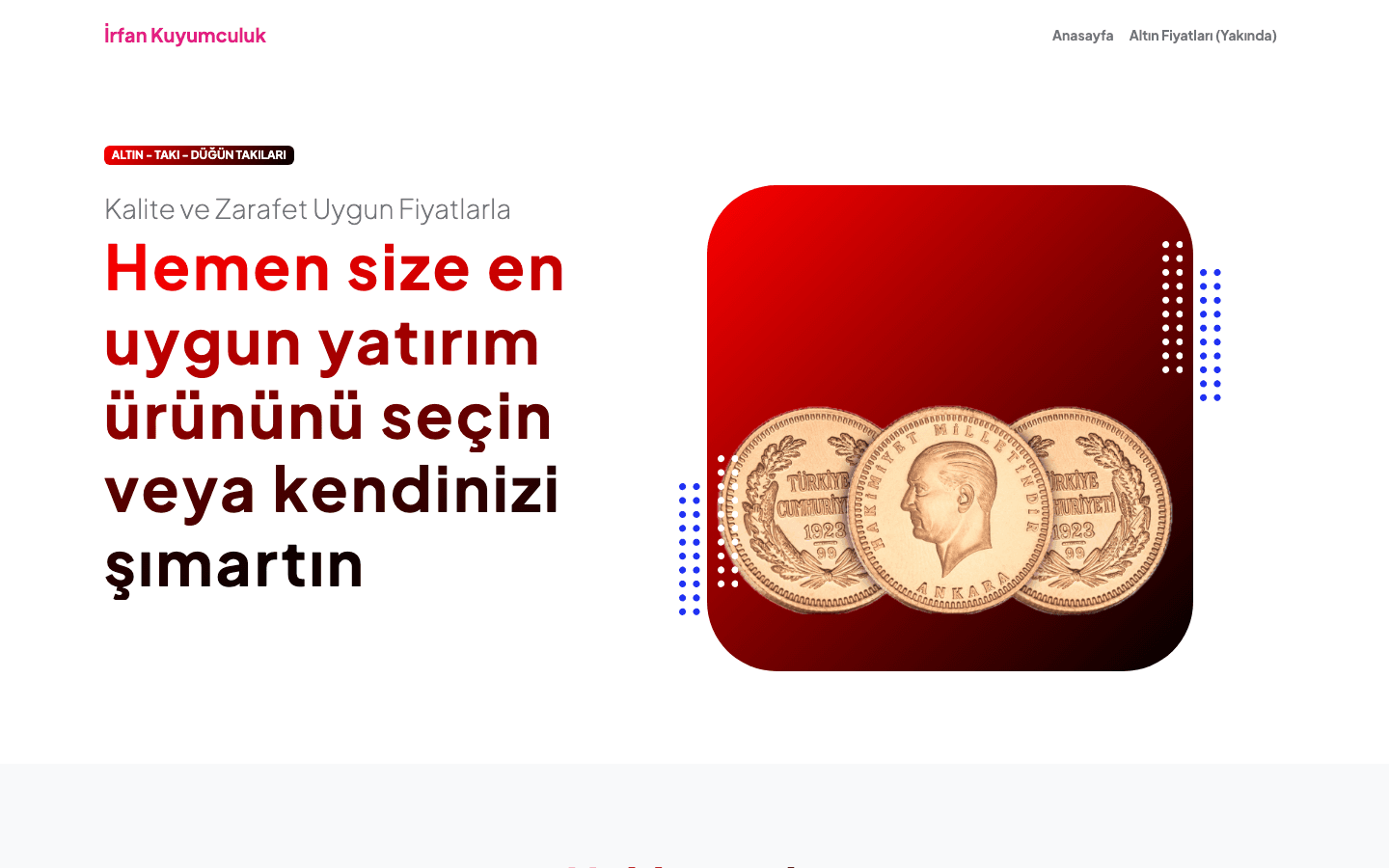
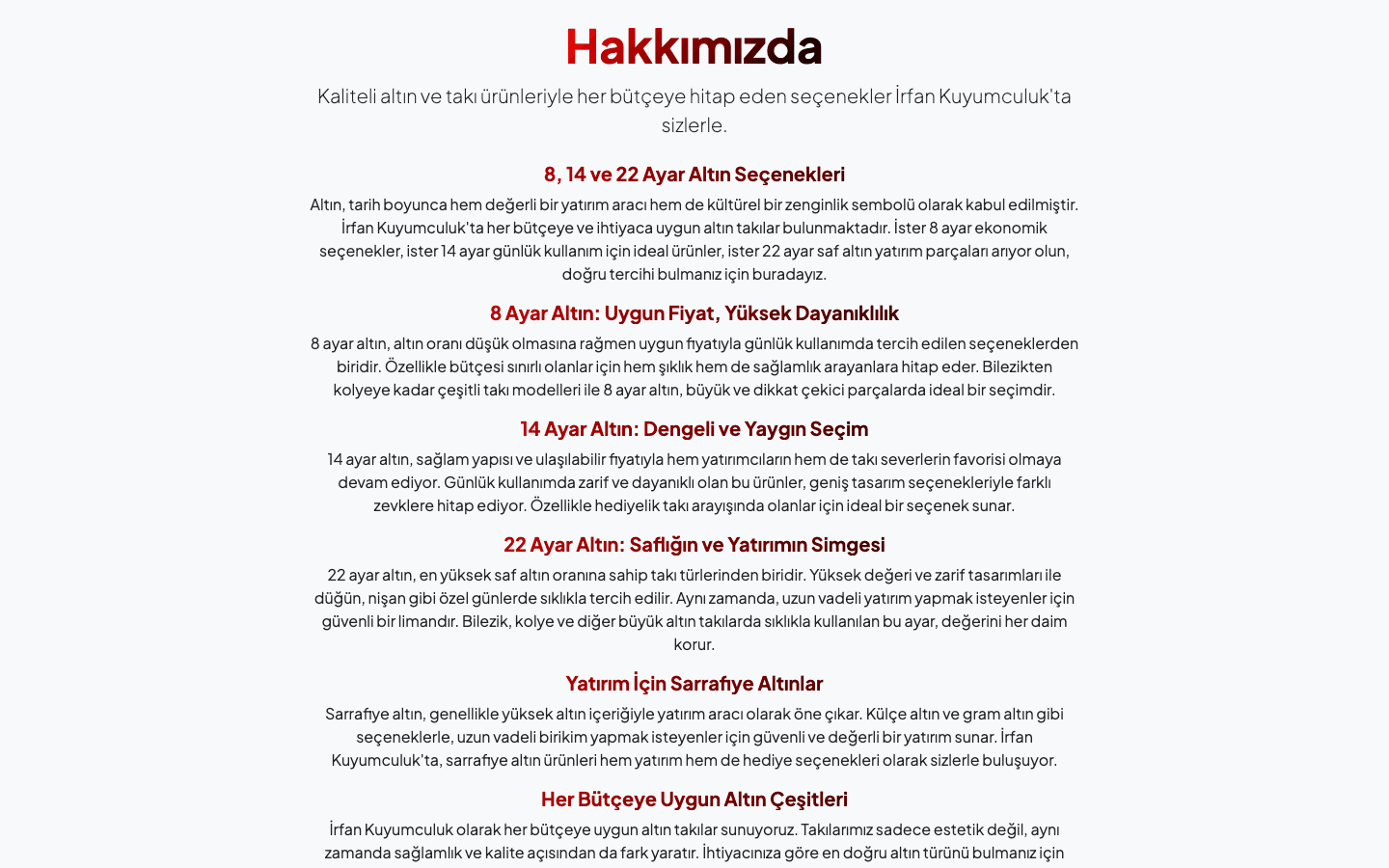
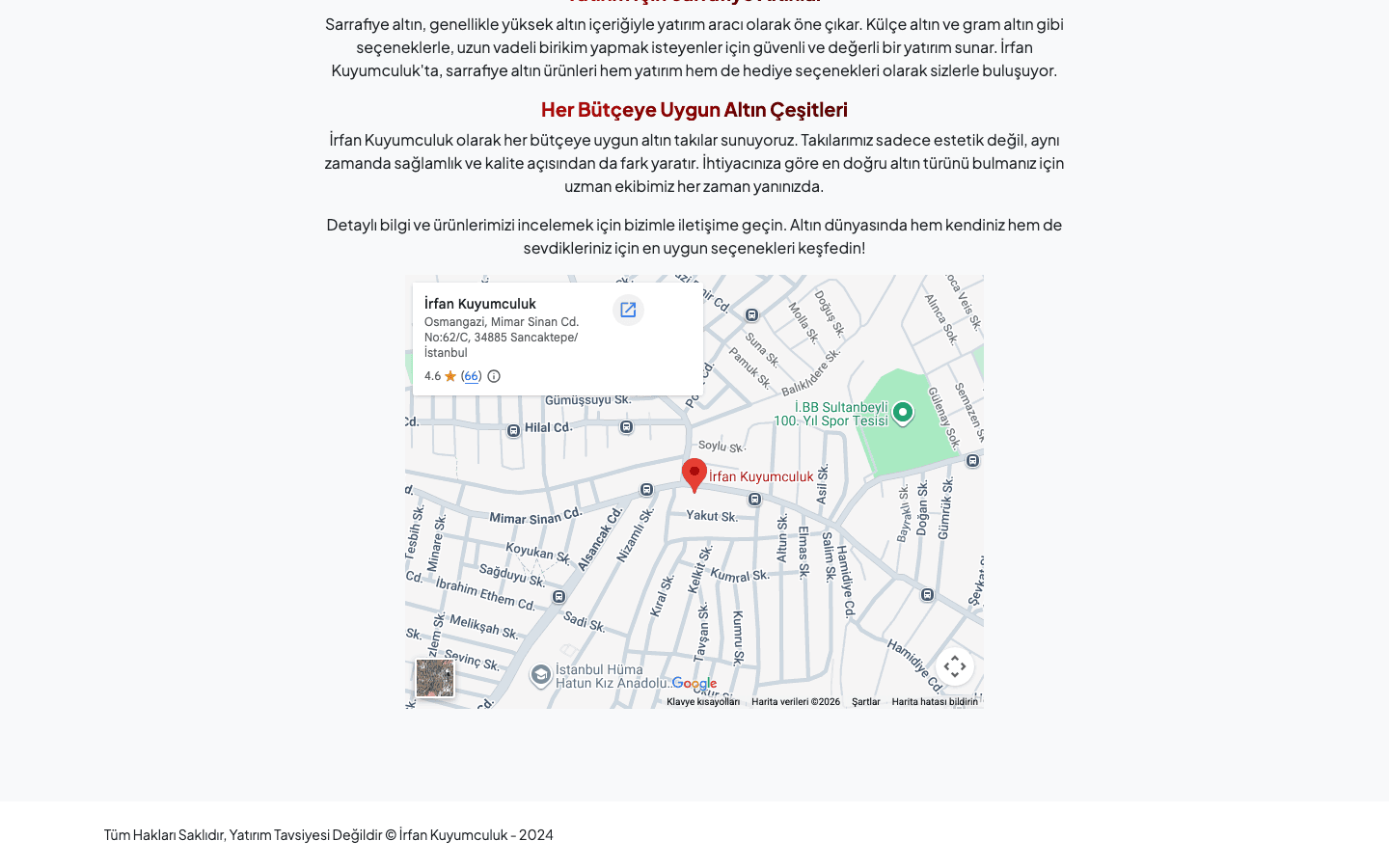
irfankuyumculuk.com.trIrfan Kuyumculuk is a jewelry store website providing business information and real-time gold price updates. Similar to its sister site, it features a clean design focused on building customer trust, a product catalog, and direct messaging integration for customer inquiries.
Project Gallery
How We Built It
The Challenge
Competing in the local SEO space for jewelry stores required a fast, informative website. The limited online functionality needed to be maximized with real-time gold prices and easy contact options to drive in-store visits.
Our Solution
We implemented real-time gold price display as a key value proposition, a product catalog for showcasing inventory, and direct messaging integration for quick customer communication. The design builds trust with a professional appearance appropriate for the jewelry industry.
Results
- •Higher engagement and customer inquiries
- •Real-time gold prices drive repeat visits
- •Direct messaging increased customer reach
- •Professional online presence for the brand
Tech Stack
Frontend
Features
Frequently Asked Questions
Yes. Every project is a real product Pinkontin designed and built, either for a client or as its own platform. Most are live sites you can open now, such as zaften.com, thevoidhub.com, and suitcentury.com. A few, like Yemeklee and Nuvemag, are still in development, and each page says so. Every page describes the actual feature set, the technology used, and the challenge, solution, and results.
Pinkontin builds SaaS platforms, e-commerce stores, B2B wholesale marketplaces, content and magazine sites, and corporate websites. Examples in the portfolio include a jewelry and currency-exchange management platform (Zaften), a Discord-style voice and community app (Void), a men's suit store with wedding group ordering (Suit Century), and a privacy-focused web analytics tool (Web Analyzer App).
Pinkontin builds mostly on Laravel and Next.js, with React and Node.js for real-time apps, and MySQL, PostgreSQL, and Redis for data. Real-time products use WebSocket and WebRTC, payments run through Stripe and PayPal, and simpler corporate sites use WordPress or plain HTML, CSS, and JavaScript. Each project page lists the stack broken down by layer: frontend, backend, real-time, and infrastructure.
Each Pinkontin portfolio page is a single project case study that answers three things: what was built, how it was built, and what the result was. Every page names the product and its real feature set, breaks the technology down by layer (frontend, backend, real-time, and infrastructure), and lists the challenge, the solution, and the outcomes. The work spans SaaS platforms, e-commerce stores, B2B marketplaces, content and magazine sites, and corporate websites, built mostly on Laravel, Next.js, React, and MySQL or PostgreSQL. Most projects link to their live site, and a few, like Yemeklee and Nuvemag, are still being built.