Void
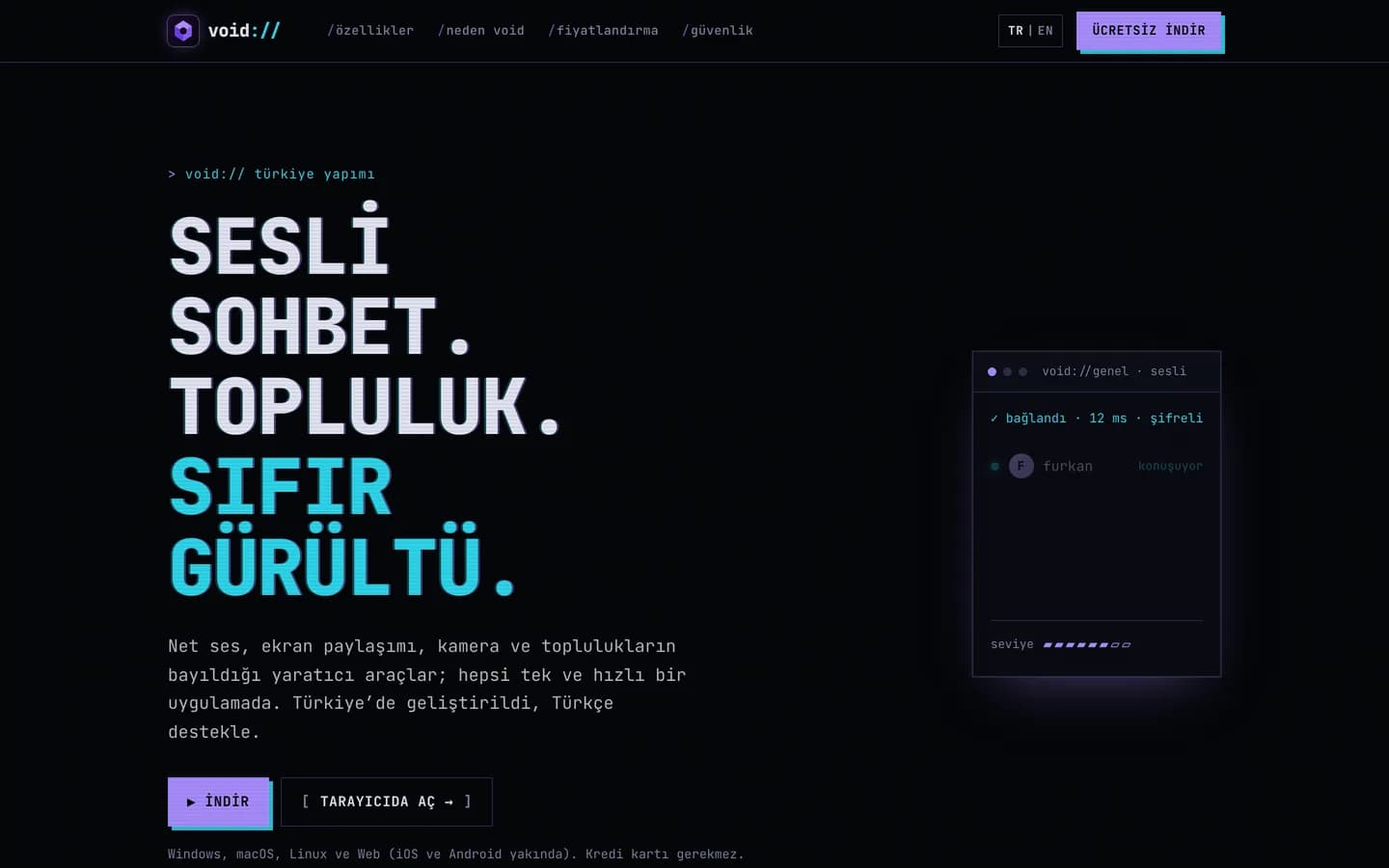
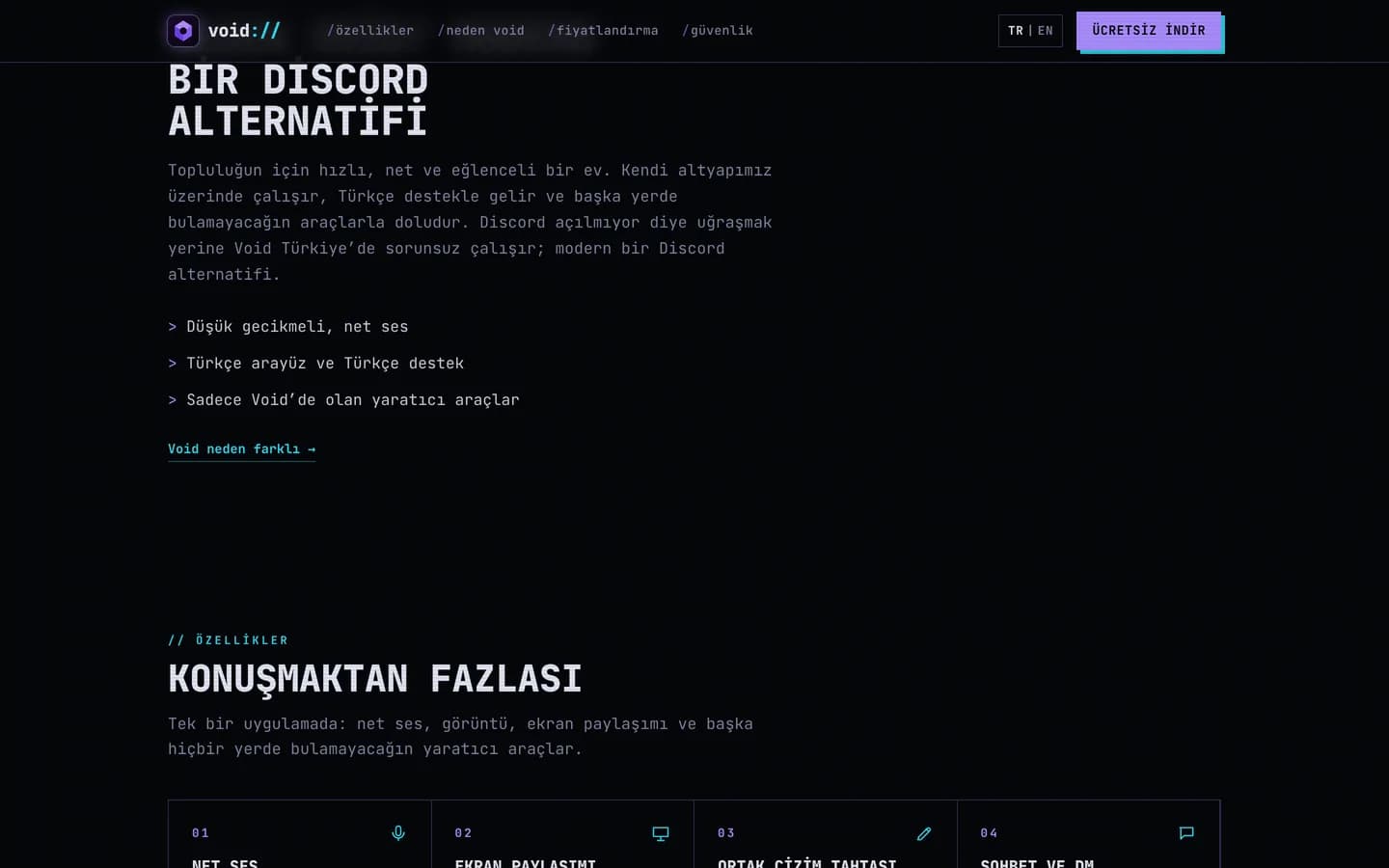
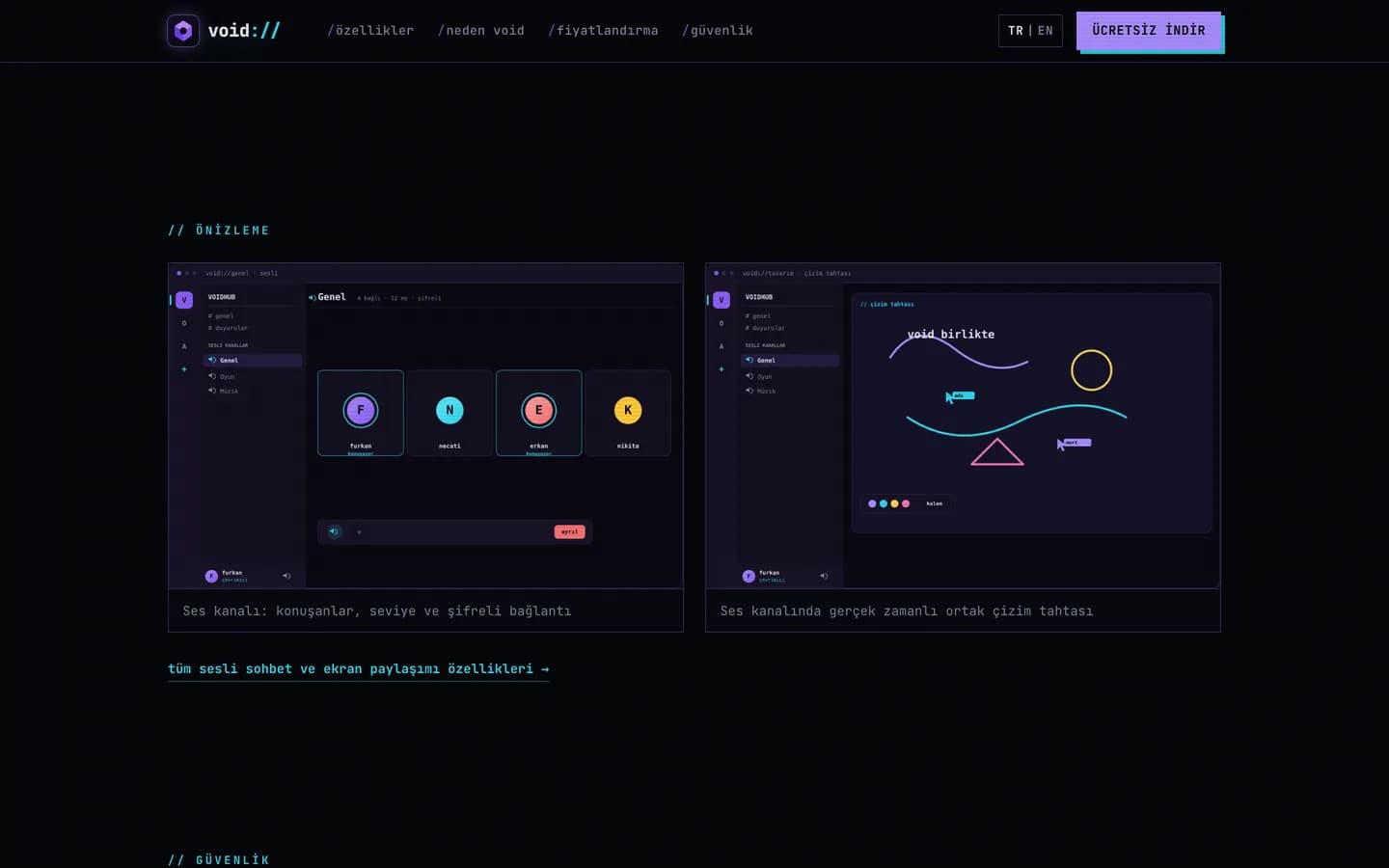
thevoidhub.comVoid is one of our own products, built from scratch as a modern, Turkish-first alternative to Discord on independent infrastructure. It offers low-latency group voice with AI noise cancellation, one-click screen sharing, a real-time collaborative drawing board, topic-based text channels, direct messages, reactions, voice notes, and file sharing. Extras include a soundboard, a music bot with a YouTube queue, and deep profile customization such as avatar rings, banners, levels, badges, and themes. Security covers two-factor authentication, session rotation, moderation tools, and audit logging. Void runs on Windows, macOS, Linux, and the web, with mobile apps on the way.
Project Gallery
How We Built It
The Challenge
Real-time group voice has to stay low-latency and stable across many users while supporting screen sharing, a shared drawing board, and a media bot at the same time. The product also needed a polished, customizable interface to stand next to established platforms.
Our Solution
We built the platform around WebRTC for voice, video, and screen sharing, with a WebSocket layer for presence, channels, and live collaboration. AI noise cancellation cleans up voice, a soundboard and music bot extend channels, and a flexible profile and theming system gives users room to personalize. Security includes two-factor authentication, session rotation, and audit logging.
Results
- •Low-latency group voice with AI noise cancellation
- •Real-time screen sharing and a shared drawing board
- •Cross-platform desktop and web apps from one codebase
- •Turkish-first interface on independent infrastructure
Tech Stack
Frontend
Real-time
Backend
Related Services
Social Media Platforms
Community-driven platforms with real-time messaging, feeds, and social features.
SaaS Development
End-to-end SaaS platform development with multi-tenancy, Stripe billing, and scalable AWS cloud architecture, built by a dedicated SaaS development team.
API & Backend Development
Well-structured RESTful and GraphQL APIs, microservices architecture, and database design built for scale.
Frequently Asked Questions
Yes. Every project is a real product Pinkontin designed and built, either for a client or as its own platform. Most are live sites you can open now, such as zaften.com, thevoidhub.com, and suitcentury.com. A few, like Yemeklee and Nuvemag, are still in development, and each page says so. Every page describes the actual feature set, the technology used, and the challenge, solution, and results.
Pinkontin builds SaaS platforms, e-commerce stores, B2B wholesale marketplaces, content and magazine sites, and corporate websites. Examples in the portfolio include a jewelry and currency-exchange management platform (Zaften), a Discord-style voice and community app (Void), a men's suit store with wedding group ordering (Suit Century), and a privacy-focused web analytics tool (Web Analyzer App).
Pinkontin builds mostly on Laravel and Next.js, with React and Node.js for real-time apps, and MySQL, PostgreSQL, and Redis for data. Real-time products use WebSocket and WebRTC, payments run through Stripe and PayPal, and simpler corporate sites use WordPress or plain HTML, CSS, and JavaScript. Each project page lists the stack broken down by layer: frontend, backend, real-time, and infrastructure.
Each Pinkontin portfolio page is a single project case study that answers three things: what was built, how it was built, and what the result was. Every page names the product and its real feature set, breaks the technology down by layer (frontend, backend, real-time, and infrastructure), and lists the challenge, the solution, and the outcomes. The work spans SaaS platforms, e-commerce stores, B2B marketplaces, content and magazine sites, and corporate websites, built mostly on Laravel, Next.js, React, and MySQL or PostgreSQL. Most projects link to their live site, and a few, like Yemeklee and Nuvemag, are still being built.