The Rise of Jamstack: Revolutionizing Modern Web Development
Discover how Jamstack is revolutionizing web development with its focus on performance, security, and scalability. Learn the benefits and how to build with Jamstack.
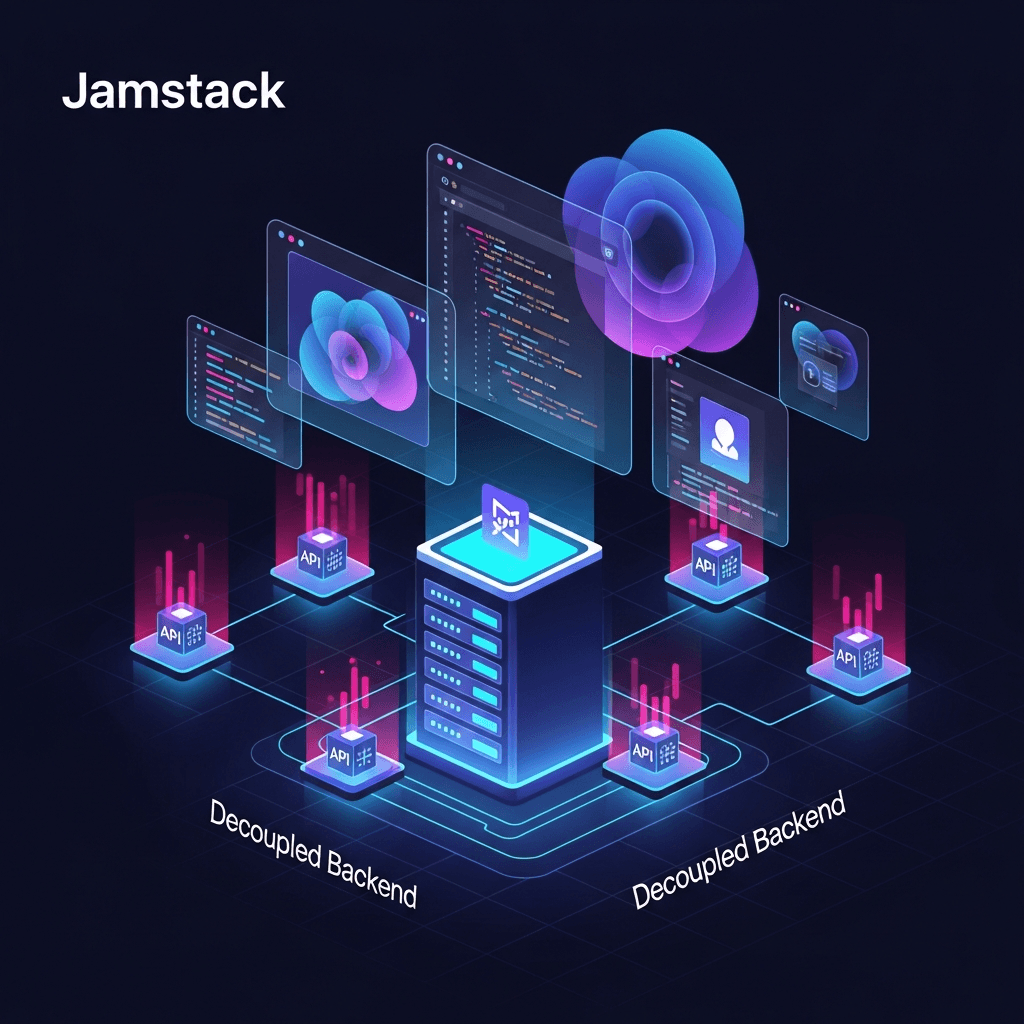
Introduction to Jamstack
In the ever-evolving landscape of web development, Jamstack has emerged as a game-changing architectural approach. By decoupling the frontend from the backend, Jamstack allows developers to build fast, secure, and scalable websites. This article explores the key components of Jamstack and how it is reshaping the way we build for the web.
What is Jamstack?
Jamstack stands for JavaScript, APIs, and Markup. It's a modern web development architecture that emphasizes performance, security, and scalability. Unlike traditional monolithic web architectures, Jamstack separates the frontend and backend, allowing developers to serve pre-rendered static files directly from a Content Delivery Network (CDN).
Components of Jamstack
- JavaScript: Used to handle dynamic functionalities and interactions on the client-side.
- APIs: Third-party services or custom-built APIs provide the backend functionality, which can be accessed over HTTPS.
- Markup: The pre-rendered HTML files generated by static site generators.
Benefits of Using Jamstack
Jamstack offers several advantages over traditional web architectures, making it an attractive choice for modern web development.
Performance
By serving static files from a CDN, Jamstack sites can load incredibly fast. This is because there's no need to wait for server-side processing to render a page.
Security
With no direct connection to a database or server-side processing, the attack surface is significantly reduced, enhancing the security of Jamstack applications.
Scalability
Since the frontend and backend are decoupled, scaling a Jamstack application is often as simple as increasing the CDN's capacity. This makes it easier to handle large traffic spikes without compromising performance.
Building a Jamstack Application
Building a Jamstack application typically involves using a static site generator, such as Gatsby or Next.js, along with headless CMS options like Contentful or Sanity.io.
Static Site Generators
Static site generators are tools that compile source files into static HTML. They allow developers to build complex applications without the overhead of server-side rendering.
Integrating APIs
APIs play a crucial role in Jamstack applications by providing dynamic data and functionality. You can use public APIs or create your own using services like AWS Lambda or Pinkontin's API & Backend Development.
Case Studies: Successful Jamstack Implementations
Many companies have embraced Jamstack to power their web platforms. One notable example is WebAnalyzer App, which leveraged Jamstack's capabilities to deliver a high-performance analytics tool.
Conclusion: The Future of Web Development
As more developers recognize the benefits of Jamstack, its adoption is likely to continue growing. By focusing on speed, security, and scalability, Jamstack is poised to become a standard in modern web development practices. If you're considering a new project, explore how Pinkontin's Web Applications services can help you harness the power of Jamstack.